
What is a Right Response to the Problem Facing Minorities in An Age When Unity is Found through Diversity?
Maria Teresa Gonzalez Esquivel
In 1974, Queen Elizabeth delivered a message alluding to the problems of continuing violence in Northern Ireland and the Middle East, famine in Bangladesh and floods in Brisbane, Australia with the powerful message “we have much more in common, than there is dividing us”[1]. Such powerful words conveyed the message that despite all the differences in language, race, culture and tradions, humans are far more alike than different from each other. Unfortunately today, certain divisive values such as competitiveness and individualism, continue to fuel the sense of separateness and perpetuate what the Ancient Wisdom writings refer to as the Great Illusion.[2]
As Alice Bailey explains in A Treatise on White Magic, humanity has wandered for centuries “in the world of illusion, for it is of [their] own creating”[3]. However, from the perspective of consciousness, human beings are potentially in constant interaction with both worlds—the higher world of (spiritual) realities and the objective world as yet surrounded by a veil of illusion. By standing at this center point with one leg in each world, they are able to bring light to the “dim vales of Earth,” and gradually learn to disintegrate the illusion by the steady evolution of “the radiant light of the soul”[4]. This dual activity is a step of the evolutionary process that will eventually lead to the realisation of synthesis and unity and its objective manifestation in nature through the medium of the human kingdom.
At the psychological level, the problem of minorities is also essentially an issue of separateness – “an emphasis upon personal and individual good… an infringement of the Law of Love… [which] signifies wrong relation to other human beings”[5]. As discussed in a recent World Goodwill blog post Polarization: A mirage in the quest for unity, individual and group identities play a key role in the consolidation of a worldview of unity built upon the foundation of our shared humanity. Separateness can be countered by a change of attitude that expands into a universal approach to life.[6] This requires collective efforts that begin in early childhood and are consolidated through education.
Alice A. Bailey approached the problem of minorities from the perspectives of racial prejudice and national superiority. And indeed, the subject of race has been one of the central divisions of humanity; however there are other minorities beyond racial that experience discrimination, marginalization and isolation from the dominant group(s) in a society. Nonetheless, as she also explains, “it is the concretising unprincipled mind which brings about all the troubles of humanity. It is the sense of I-ness and the spirit of separative individuality which has brought humanity to its present condition”[7].
In absolute terms, a minority can be defined as “the smaller in number of two groups constituting a whole” [8]. Following this definition, men are a minority in countries with a larger female population. However, this notion is not as clear-cut. Let’s look at the cases of Armenia and Ukraine. According to the World Bank, in 2022 the female population of Armenia and Ukraine represented 55% and 54.1% of the total. However, if we look closer to other aspects of life, such as the share of seats in the parliament, we find that they only hold 35.5% and 20.3% of the total respectively, hence disadvantaged by their minority influence on legislation and issues of national governance. Similary, if we look at minorities from a racial or ethnic perspective, we will find that what it means to be a minority depends on various factors beyond race, ethnicity and number. For instance, 81.4% of the population in South Africa is black African, while only 7.3% are white. Yet, the apartheid regime – a minority in absolute terms – held disproportionate power, making black population the de facto minority from 1948 until 1994.[9]
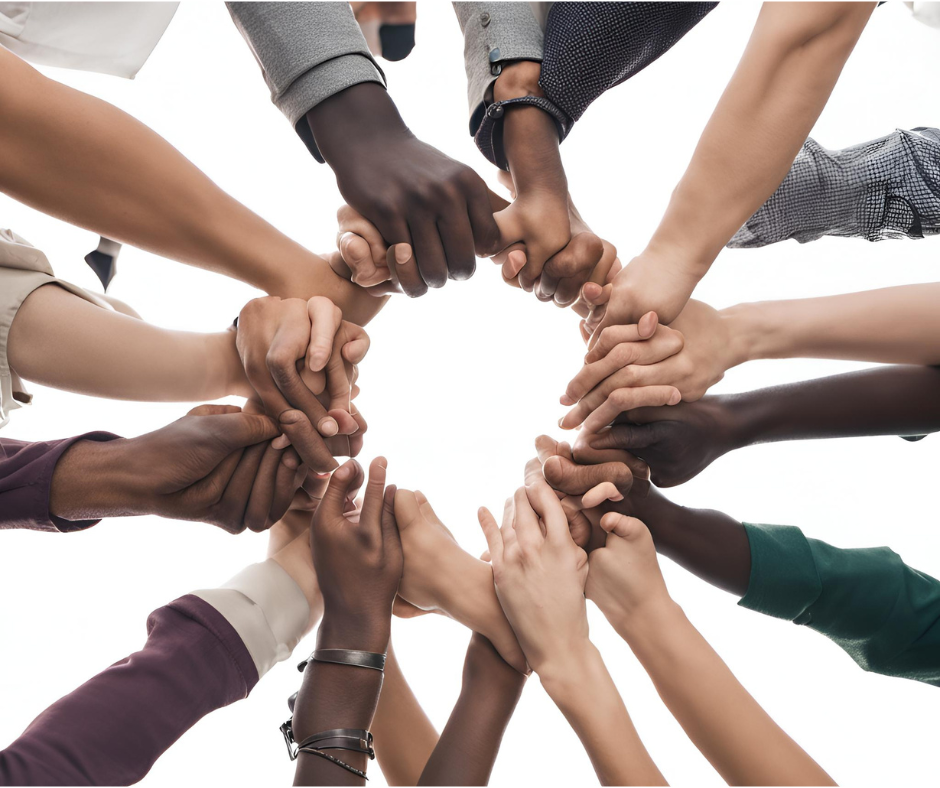
The former examples help to illustrate how the problem of minorities is a broad and complex issue that encompasses various challenges and concerns faced by minority groups within a society. These challenges can be social, economic, political, or cultural in nature, and they often stem from historical discrimination, systemic inequalities, and unequal distribution of resources and opportunities. Some of the most frequent challenges faced by minority groups are:
1. Discrimination and prejudice: Minority groups often face discrimination and prejudice based on factors such as race, ethnicity, religion, gender, sexual orientation, disability, or socioeconomic status. This discrimination can manifest in various forms, including unequal treatment in employment, housing, education, and healthcare.
2. Marginalization and exclusion: Minority groups may experience marginalization and exclusion from mainstream society, leading to limited access to social, economic, and political opportunities. This can result in disparities in income, wealth, education attainment, and representation in decision-making processes.
3. Violence and hate crimes: Minority communities are sometimes targeted by violence and hate crimes motivated by prejudice and bigotry. This can include physical attacks, harassment, vandalism, and other forms of violence aimed at instilling fear and asserting dominance over marginalized groups.
4. Legal and policy barriers: Minority groups may face legal and policy barriers that perpetuate their marginalization and restrict their rights and freedoms. This can include discriminatory laws, practices, and policies that deny equal protection under the law or limit access to resources and services.
5. Cultural assimilation and identity loss: Minority communities may struggle to maintain their cultural traditions and heritage in the face of unreasonable assimilation pressures from the dominant culture. This can lead to a loss of language, customs, and values, as well as feelings of disconnection from one's cultural roots and of alienation and isolation from the larger group – ultimately fueling separateness and undermining right relationship.
6. Intersectionality: Many individuals belong to multiple minority groups and face intersecting forms of discrimination and marginalization. Intersectionality recognizes the interconnected nature of social identities and the unique challenges faced by individuals who belong to multiple marginalized groups.
Addressing the problem of minorities requires comprehensive efforts at various levels, but first of all, we need to come to the realization of our common humanity, which is intrinsically registered in the human consciousness. The awakening of this consciousness can start form early childhood if we cultivate an atmosphere of love, patience, ordered activity, and understanding.[10] Once we acknowlede our shared humanity, our societies can strive towards greater inclusivity, social cohesion, and mutual respect.
At the mundane level, appraching the problem of minorities requires recognizing the unique experiences and needs of different minority groups and ensuring that their voices are heard and their rights are protected. Creating spaces to bring people closer together, engage in dialogue and participate in public life can enable an environment of understanding and empathy to strenghten the sense of the One Humanity. This can be furthered approached through mechanisms such as legal reforms, policy interventions, community empowerment initiatives, awareness campaigns, and efforts to welcome diversity and inclusion in all aspects of society. As Alice Bailey mentioned, “love is unity, at-one-ment and synthesis…[whereas] separateness is hatred, aloneness and division”. In practical terms, this means learning to love “the life side of form, rather than loving that which is connected with the form side of life”[11]. By doing so, humanity can foster new generations with a worldview of world citizenship, which values the individual but as part of the One Humanity. Ultimately, embracing our shared humanity fosters a more just, compassionate, and harmonious world for all individuals, paving the path to the realization of unity and to “help shatter the great illusion which has held, and still holds, the sons of men in thrall”[12].
[1] Royal UK. Christmas Broadcast 1974. The Queen's Christmas Broadcast in 1974 alludes to problems such as continuing violence in Northern Ireland and the Middle East, famine in Bangladesh and floods in Brisbane, Australia. Available at https://www.royal.uk/christmas-broadcast-1974#:~:text=We%20may%20hold%20different%20points,than%20there%20is%20dividing%20us.
[2] Alice A. Bailey. Telepathy and the etheric vehicle. Lucis Trust, page 137
[3] Alice A. Bailey. A Treatise on White Magic. Lucis Trust, page 613
[4] Alice A. Bailey. A Treatise on White Magic. Lucis Trust, page 613
[5] Alice A. Bailey. From Bethlehem to Calvary. Lucis Trust, page 205
[6] Alice A. Bailey. 1964. Problems of Humanity. Lucis Trust, pages 314-315
[7] Alice A. Bailey. A Treatise on White Magic. Lucis Trust, page 614
[8] Definition of “Minority” from Merriam’s Webster Online Dictionay. Available at: https://www.merriam-webster.com/dictionary/minority
[9] Hisotry.com Editors. Apartheid. Last updated: April 20, 2023 | Original: October 7, 2010. Available at https://www.history.com/topics/africa/apartheid
The End of Apartheid. Archive: U.S. Department of State. Available at https://2001-2009.state.gov/r/pa/ho/time/pcw/98678.htm
[10] Alice A. Bailey. Education in the New Age.
[11] Alice A. Bailey. From Bethlehm to Calvary. Lucis Trust, page 205.
[12] Alice A. Bailey. Glamour: A World Problem. Lucis Trust, page 16.