

Marco
Marco is an international civil servant.
Context
International cooperation started becoming a key vehicle for planning and action from humanitarian relief to development in the mid-19th century with the creation of the first international organizations, including the International Committee of the Red Cross and the International Telecommunication Union.
The two World Wars marked significant phases in this development. At the end of World War I, the League of Nations began the transition from a peace paradigm based on security, which had been in place for millennia, to one that also embraced development. This transition was completed with the creation in 1945 of the United Nations, whose Charter enshrines the principle of international cooperation for development.
Many things have changed since then; countries have instituted national agencies for international cooperation; civil society organizations engaged across the spectrum from relief to development have grown enormously; and there has been a similar growth in the private sector through the establishment of philanthropic institutions and corporate social responsibility.
Arguably, we have started another significant transition: from international cooperation between countries, to multi-stakeholder global cooperation.
Almost 80 years have passed since the adoption of the UN Charter. From the point of view of a human life this is a long time, but from the perspective of humankind and planetary development it is not so long. Global cooperation today faces some major challenges, so it is important to ask: How is it Faring?
Challenges
We have entered an era of increasing consumerism, encompassing not only material goods but also ideas, which are seemingly deemed to become obsolete very fast without serious reflection. The search for “new ideas” tends to place the emphasis more on the “new” than on the “ideas”. It is as if we have forgotten that ideas and innovation are incrementally built and refined over decades, if not generations, or centuries or even millennia. Attention span is decreasing, accelerated by social media. Younger generations attribute responsibility to older generations, without necessarily questioning whether the older generations spoiled a perfect world or inherited a world that was far from perfect, and thus inadvertently ignoring the people working hard for the common good in all generations. Conscious intergenerational cooperation is fundamental.
Education is arguably the bedrock of the development of individuals, communities and societies. Therefore, in the efforts to advance global cooperation, it is important to look at contemporary educational models to see whether they are fit for purpose, preparing and helping individuals and communities develop cooperative action for the definition and pursuit of the common good. While we are pursuing cooperation, at least ideally and in aspirational terms, current educational models seem to push for hard competition at an increasingly young age. Moreover, young pupils, barely teenagers, are expected to focus only on certain subjects to the detriment of others. At the same time there is the odd expectation that future professionals will be able to see connections across sciences and practices and thus breakdown the so-called silos. The individual and individuality are excessively placed at the center of educational models and practice to the detriment of really comprehending the centrality of the other and the collective.
Furthermore, studies point to increasing trends over the past 50 years in narcissism not only in individuals, but also, worryingly, in cultures. This seems, in part at least to be due to current educational practices (formal, informal and parental), the internet and social media, and celebrity myths. Narcissism encompasses a strong sense of entitlement over others and anything, very limited capacity to properly assess reality and risk including one’s own capacities, emphasis on appearance over substance, proneness to conflict and an ultimate lack of capacity to genuinely cooperate in good faith. Some of the effects may be witnessed and experienced for instance in the wanton destruction and exploitation of the environment and biodiversity, which poses an existential and suicidal threat to humanity. More worryingly, the percolating of narcissistic values and practices from individual characteristics to defining elements of our cultures across the world has the consequence that, individuals who may not be narcissistic adopt narcissistic values and practices to feel part of the community and society. If these trends continue, the negative consequences will be very serious for life on earth and the evolution of humankind.
In essence, there seems to be a dichotomy between idealistic aspirations to cooperate for the common good and mainstream cultural values and practices. It’s as if we would like to go one way but we keep turning in the opposite direction.
Opportunities
So, what can we do to redress this?
Certainly, the answer cannot come from an individual or a small group. Yet, luckily, we have some good pointers. An indication is given in the United Nations Charter, in particular Article 1, Paragraph 4, which sets the objective for a United Nations which represents “We the Peoples” “to be the center for harmonizing the actions of nations for the attainment of…” the maintenance of peace and security; the development of friendly relations amongst nations; and the achievement of “international co-operation in solving international problems of an economic, social, cultural, or humanitarian character, and in promoting and encouraging respect for human rights and for fundamental freedoms for all without distinction as to race, sex, language, or religion.”
Noteworthy, in the cited Article, is the word “harmonizing”. The Article does not speak of “harmony” but of a dynamic situation and the exercise of some form of power and goodwill that has the capacity to “harmonize” actions. Also, it does not utilize verbs such as homogenize and uniformize, thus indicating the intention of leveraging diversity and all the different capacities and skills which are badly needed when facing challenges of significant magnitude, like the ones that we witness nowadays. We need all hands on deck.
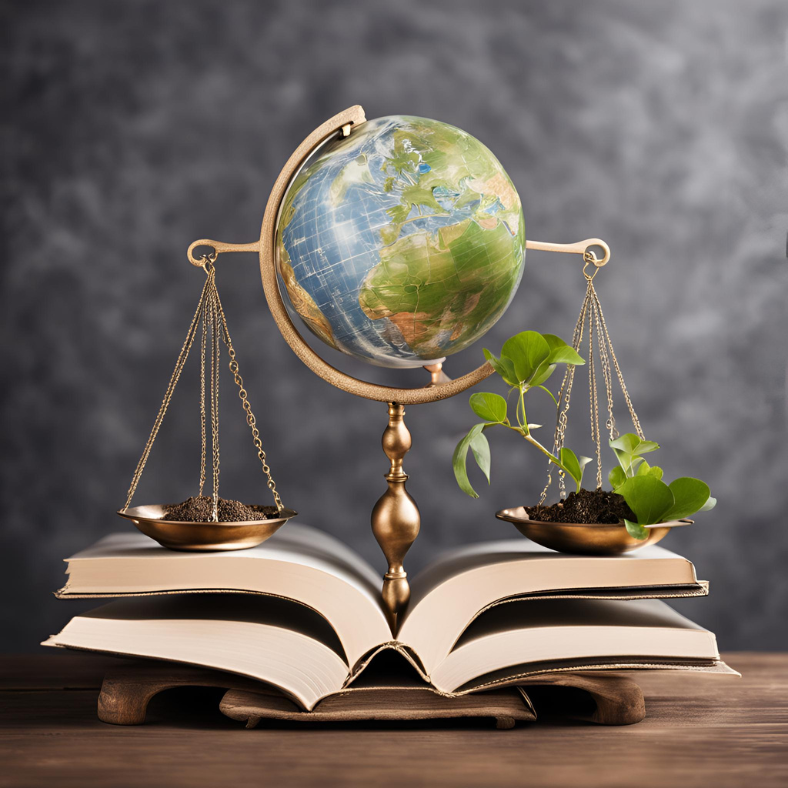 Planning is certainly a key requirement and instrument to actualize any harmonizing action. The scale of global planning that we see nowadays is unprecedented in history. In other words, something special is happening under our eyes. True, resources are not matching the planning yet, but this is not a reason to stop planning; rather, it emphasizes the necessity to continue influencing existing financing and economic models and instruments to bring resources to bear on the common good that is being increasingly articulated and made explicit through collective planning efforts.
Yet, while these efforts are being conceived and set in motion, it appears that a key priority for goodwill people is also a reinvigorated focus on education (formal, informal and parental). Curricula are needed to: foster and evoke a better understanding of what it takes to harmonize things within ourselves first and then in our communities; develop a growing ability to cooperate; reposition the individual from being at the center to being a servant of the wider natural systems and their cycles, adjusting development planning accordingly; foster the use of individual and collective thought and will and heart in service of the common good; nurture and encourage creativity; help navigate our individual and collective consciousness, developing its potentials, and placing the self in a right and commensurate perspective and relation with other parts of the consciousness and the collective, while supporting a scientific application of meditation; and understand and utilize duality and multipolarity. Luckily, all the knowledge and foundational ideas necessary to this purpose are already available; they just need our stronger determination, attention and application.
In other words, there is an urgent need for an education that prepares individuals to be part of collectives, and collectives to be part of wider collectives and natural kingdoms, in synch with the unfolding planetary cycle. Such an education would plant the seeds for a new culture and thus a new civilization.
